
Keeping the lights on in a fast-growing metro area often means tackling infrastructure projects that are complex, highly visible and anything but simple. That is the case for Great River Energy’s Pilot Knob-Burnsville transmission project, a major rebuild designed to strengthen reliability in parts of Eagan and Burnsville.
Why the project is needed
Pilot Knob-Burnsville is an existing 69-kilovolt (kV) transmission line that has reached the end of its useful life. Aging facilities with limited capacity to meet the load growth needs of this area mean the system must be modernized to continue delivering reliable service to cooperative members, including those served by Dakota Electric Association.
The project includes rebuilding approximately 8.75 miles of transmission line and upgrading both the Pilot Knob and Burnsville substations.
While the line will initially continue operating at 69 kV, Great River Energy is rebuilding the line to 115-kV design standards. That forward-looking approach allows the line to operate at a higher voltage in the future, ensuring sufficient capacity to meet growing electrical demand.
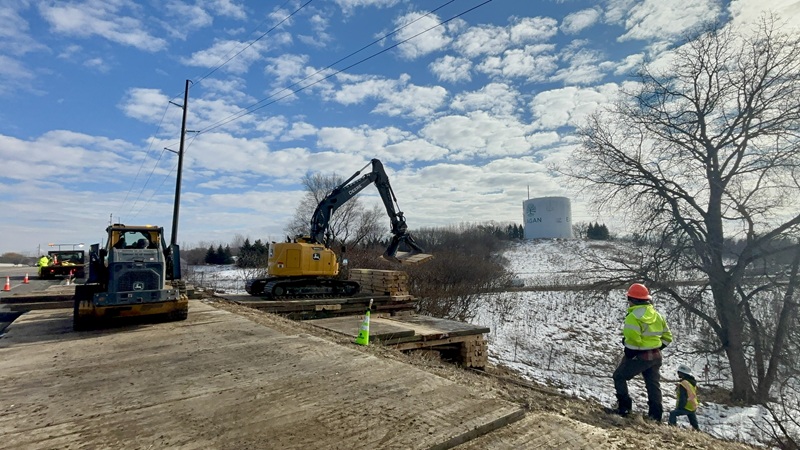
Once the project is complete, peak load serving capacity between Burnsville and Pilot Knob will expand dramatically — from 48 megawatts (MW) to 598 MW.
Designing to modern standards also means installing new equipment that improves system resilience, reduces outages risk and supports long-term load growth needs without requiring another full rebuild down the road.
The challenges
From the outset, the project team anticipated challenges, particularly due to location. Unlike rural transmission projects, this rebuild runs through tight suburban rights of way, where utilities, sidewalks, roadways and private property all compete for space. Foundation construction has required extensive coordination to avoid underground conflicts, adjust structure locations, and work safely near traffic and neighborhoods.
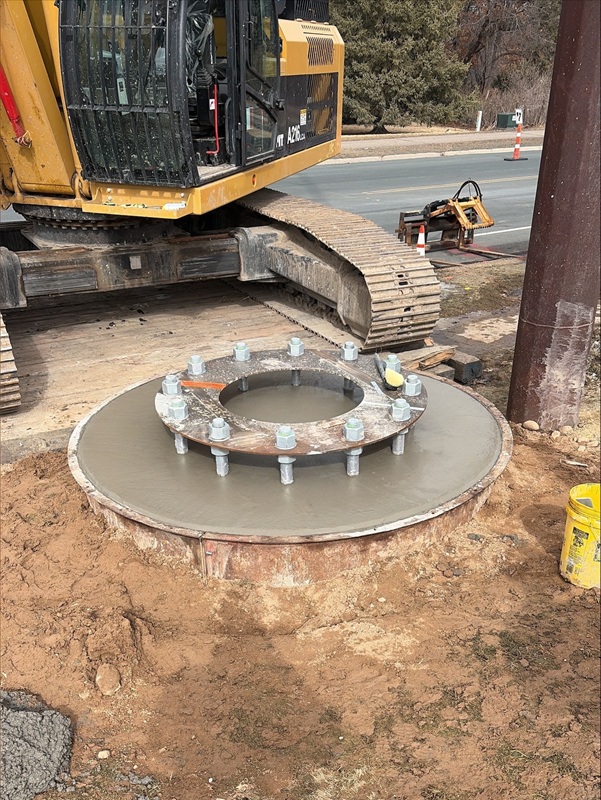
In several locations, crews have encountered congested underground utilities, requiring real-time adjustments to foundation designs and placement — often in the field and on tight schedules.
“There are a ton of underground conflicts that we have to face. In projects like these, success is not defined by the absence of obstacles, but by how effectively our crews respond to (or avoid) them.”
— Great River Energy Senior Project Manager Rob Toomey
The project also involves replacing older structures with taller, modern steel poles. Installing them in a constrained environment requires careful management of access, traffic, safety and construction logistics, all while maintaining reliable service for nearby homes and businesses.
Engagement makes the difference
Despite the challenges, the project has moved forward smoothly, thanks largely to early and ongoing engagement. By working with stakeholders upfront, explaining why the project was necessary and committing to transparency, the team built trust and addressed concerns before they escalated.
“Any time you’re rebuilding transmission in a developed area, you know it’s going to be complex,” Toomey said. “In this case, we are replacing aging infrastructure in the same corridor while maintaining reliability for our members. That requires careful planning, tight coordination and early conversations with the communities we serve.”
Looking ahead
The Pilot Knob-Burnsville project is currently under construction. Work began last summer to expand the Pilot Knob Substation yard inside an active substation, where equipment must remain energized as crews build the next generation of infrastructure nearby. Crews are preparing to complete the 115-kV part of the yard by mid-summer 2026 after which the substation will be taken out of service so remaining work can be safely completed by the summer of 2027.
As for the transmission line, clearing has been completed on one of the four line segments and pier foundations are almost all poured to allow for the full rebuild of that segment to begin this spring. Work on the Burnsville Substation is expected to begin in 2026 with the expansion of the site and the entire project anticipated to be in-service in 2029.
While the work is complex and highly visible, the goal remains simple: reliable power for the communities Great River Energy serves, today and into the future.
 " data-object-fit="cover">