
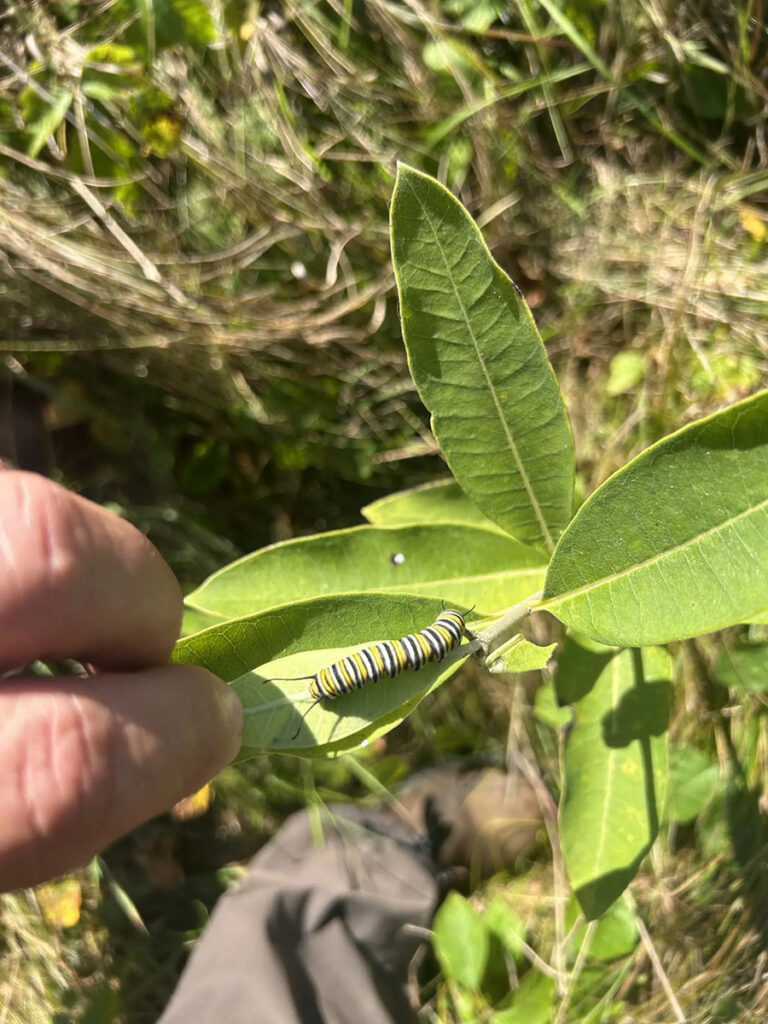
Monarch monitoring success highlights the strength of vegetation management
Great River Energy’s application for participation in the monarch candidate conservation agreement with assurances (CCAA) was approved in late 2024 and the cooperative recently completed its first year of milkweed monitoring with strong results.
Milkweed monitoring showed that Great River Energy has more than enough milkweed to meet the program’s criteria. The monitoring team found an average of 11.5 milkweed stems per plot. The goal is five.
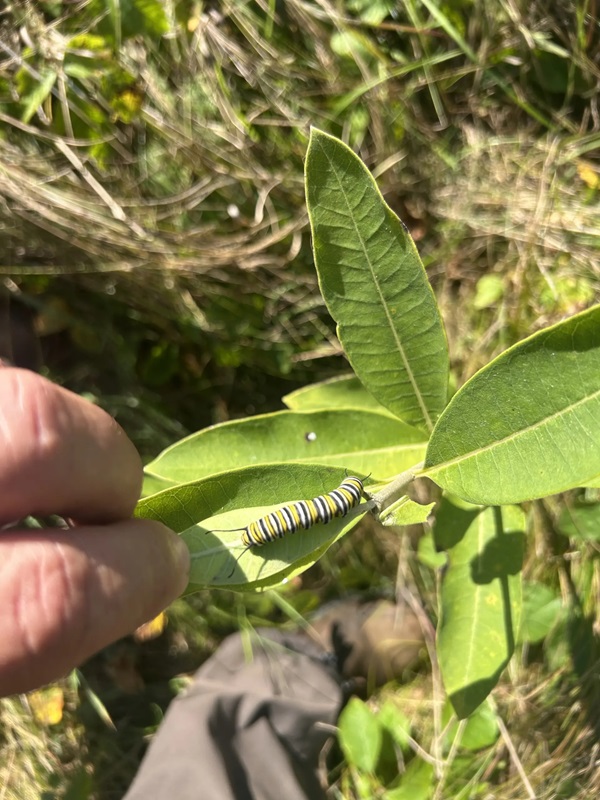
The CCAA is a voluntary program to create habitat for the monarch butterfly in transmission rights of way and other lands. In return, Great River Energy avoids regulatory requirements that will apply if the monarch is listed under the Endangered Species Act.
Great River Energy’s Erik Heinen, environmental administrator, gave credit for the successful results to Great River Energy’s integrated vegetation management approach.
“These results show that our approach to vegetation management has real benefits for monarchs,” Heinen said. “This approach isn’t just keeping our rights of way safe and reliable, it’s creating habitat that supports monarchs and other pollinators across thousands of acres of rights of way that we manage.”
Great River Energy’s integrated vegetation management approach reduces safety risks from trees contacting power lines, which improves grid reliability. The approach also enhances ecological health by using pollinator-friendly practices, including native seed restoration and innovative, low-impact approaches like targeted sheep grazing.
“Integrated vegetation management allows us to look beyond short-term clearing and focus on long-term results. It’s a thoughtful, science-based approach that helps maintain reliable service while promoting native plant growth and supporting local ecosystems.”
— Byron Johnson, supervising manager of vegetation management at Great River Energy
To meet the CCAA monitoring requirements, monitoring was conducted at 50 locations where integrated vegetation management is used. At each location, milkweed stems were counted within a 1,500-square-foot area and recorded.
Participation in the program provides an opportunity for co-ops to improve monarch habitat, streamline conservation efforts, avoid project delays and save money. In addition, Great River Energy’s participation helps to reduce the potential that monarchs will be listed as an endangered species because the cooperative is helping create and maintain their habitats.
“Our approach to managing vegetation in the rights of way protects our transmission lines and creates habitat for monarchs and other important pollinating species,” Heinen said. “It’s a great example of an approach that is a win for both the environment and for electric reliability.”
 " data-object-fit="cover">
 " data-object-fit="cover">