
Rural areas in Minnesota continue to find innovative ways to attract private investment, skilled workers and stable employers. Foreign direct investment has become a steady source of that growth.
Many international companies are now looking beyond big cities, which is why Great River Energy is partnering with its member-owner cooperatives and regional groups to connect rural Minnesota with international companies looking for U.S. locations.
A recent trade mission to Ireland provided Minnesota leaders with a clearer view of how Irish firms assess United States locations and where rural cooperative territories fit into those decisions. The mission also identified practical ways that electric cooperatives can support foreign direct investment through infrastructure planning, workforce coordination and early-stage engagement.
Delegation reviews Irish industry, workforce and rural development models
Great River Energy Economic Development Services Manager Tom Lambrecht participated in a group of 10 Minnesota leaders from economic development, higher education, workforce training and philanthropy. Greater Mankato Growth organized the trip with Littus, a Dublin advisory firm that helps Irish companies expand to the U.S. The group focused on areas outside Ireland’s biggest cities to better compare with rural Minnesota.
The delegation focused on explaining how mid-sized U.S. regions function, how utilities support industry and how cooperative service territories reduce operational uncertainty.
Sligo, a city that serves as a regional center on Ireland’s northwest coast, has a population comparable to Greater Mankato. This led to discussions related to the development strategies of the two mid-sized regional economies. Meetings with the Sligo Chamber of Commerce and city officials covered port activity, workforce pipelines and international business recruitment.
The similarities helped ground conversations in practical topics such as land readiness, labor supply and utility coordination rather than abstract promotion.
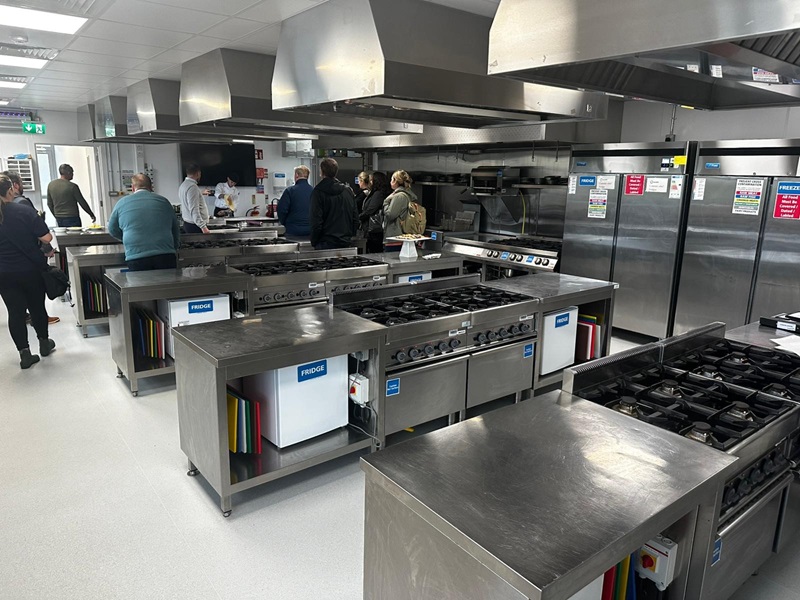
At Atlantic Technical University, the delegation reviewed training programs in construction, electrical trades, engineering, hospitality, and food processing. The structure closely matches Minnesota’s technical college system.
The AIM Centre in Sligo focuses on applied artificial intelligence and data tools for manufacturers. The center trains firms to improve production efficiency, monitor supply chains and standardize operations. Many of these tools remain underutilized among Minnesota’s rural manufacturers.
The AIM Centre offers both technical training and business advice, along with support for new companies. This approach sparked interest in future talks with Minnesota’s education and manufacturing partners.
The delegation also met with fisheries and maritime cooperatives that coordinate marketing, processing and resource management. Their structure mirrors Minnesota’s agricultural cooperatives and supports small producers through shared services.
These models reinforced the idea that cooperative ownership supports scale and stability, which international firms closely evaluate.
Dublin meetings connect research institutions to Minnesota partners
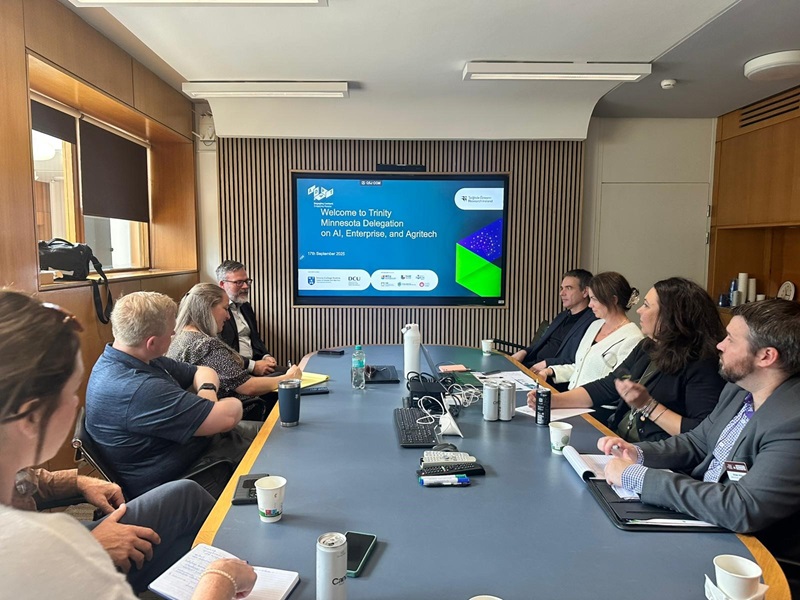
In Dublin, the delegation met with researchers at Trinity College Dublin where discussions focused on agriculture, natural resources and workforce development. Trinity presented ongoing research on peat, phosphorus reduction, water filtration and environmental monitoring — areas that match current priorities at the University of Minnesota’s Agriculture Research Center and the Natural Resources Research Institute.
Both institutions expressed interest in continued dialogue. Minnesota researchers are studying biochar production and filtration applications using wood products. Ireland’s research network is evaluating similar applications using willow trees and has active partnerships in the United States. Shared research topics create openings for university-to-university collaboration that could expand into industry partnerships.
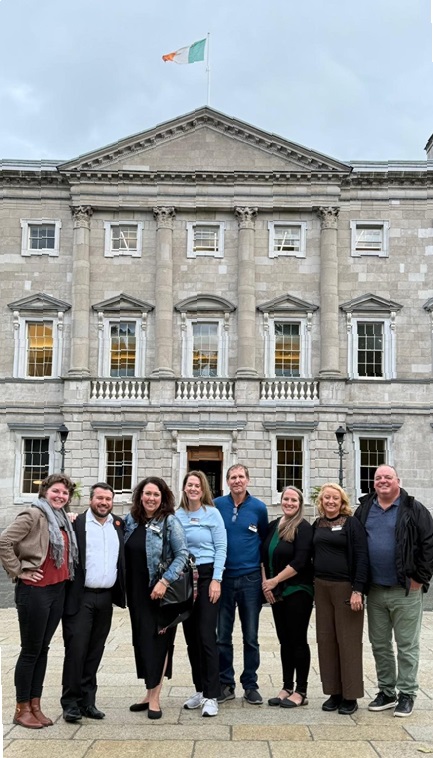
While in Dublin, the delegation also visited the Irish Parliament, observed policy discussions and met with additional workforce training entities. These meetings helped clarify Ireland’s internal economic priorities and provided context for how Irish firms evaluate long-term U.S. expansion.
Co-op service territory holds advantage
A consistent theme throughout the mission was the limited familiarity many Irish companies have with U.S. regions outside major cities.
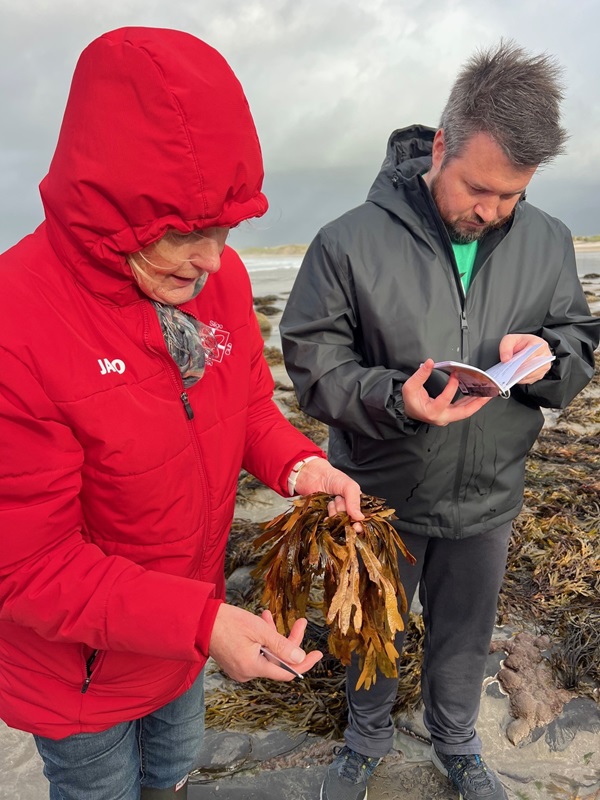
This opportunity is where electric cooperatives hold an advantage. Cooperatives serve regions with available land, competitive energy rates and infrastructure capable of supporting modern production. Their long-standing relationships with local governments and employers enable them to provide clear, practical information to international firms seeking predictable operating conditions.
Irish firms expressed interest in several specific project types:
- Agri-food technology and value-added processing
- Renewable energy supply and development
- Broad bandwidth and digital infrastructure
- Data-driven agriculture and logistics
- Workforce training partnerships with U.S. colleges
Many of these project types rely on local energy systems and benefit from the cooperative model. As Irish firms study U.S. regions, the presence of cooperatives can help reduce risk by providing consistent service, stable rates and transparent planning processes.
 " data-object-fit="cover">