
When temperatures drop, Minnesota’s economy heats up.
Snow-based recreation generated $238 million in state economic value in 2023, a dramatic rise of $126 million since 2019, according to the Bureau of Economic Analysis. While many tourism sectors declined during the pandemic, skiing and snowboarding activity increased.
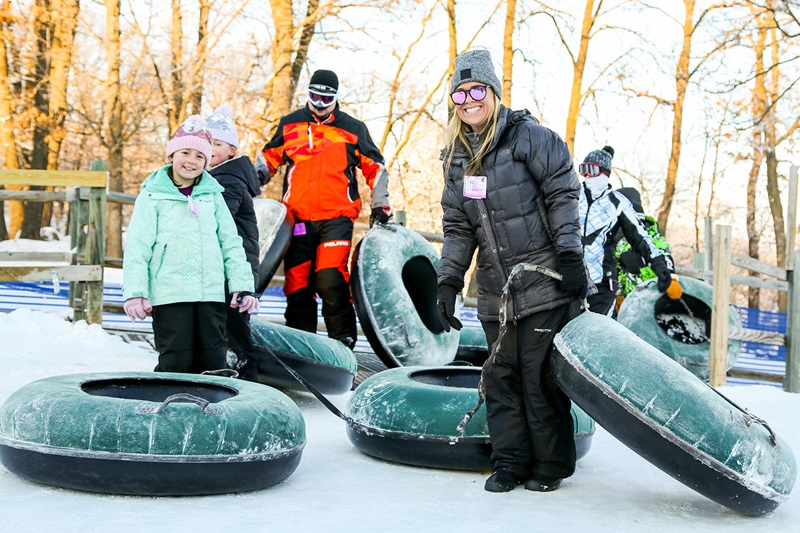
Minnesota’s 23 ski facilities employed 2,406 workers and generated nearly $9.5 million in payroll during the first quarter of 2024. This wage growth represents an industry adapting to modern labor and energy challenges. No matter how much snow falls in a given year, Minnesota’s ski economy remains a steady force in rural economic development, supported in large part by Great River Energy’s member-owner cooperatives.
Behind the scenes, reliable energy infrastructure keeps the lifts turning and the snow guns running. Great River Energy’s member-owner cooperatives — including Runestone Electric Association (REA), Meeker Energy (Meeker) and East Central Energy (ECE) — play a critical role in powering this winter economy.
Reliable energy keeps rural tourism in motion
Ski areas are among the most energy-intensive tourist destinations in Minnesota. Resorts depend on constant power to operate snowmaking equipment, chairlifts, heating systems and lodges. A single day of downtime during peak season can have major economic consequences.
The member-owner cooperatives of Great River Energy understand these stakes, and help resorts combine infrastructure investment with energy efficiency programs that help manage costs and maintain reliability, even during sub-zero cold snaps.
Runestone Electric Association supports Andes Tower Hills
In west central Minnesota, REA serves a region defined by lakes, trails and tourism. Among its members is Andes Tower Hills, one of the area’s signature ski destinations, which often faces challenges from ice storms and strong winds.
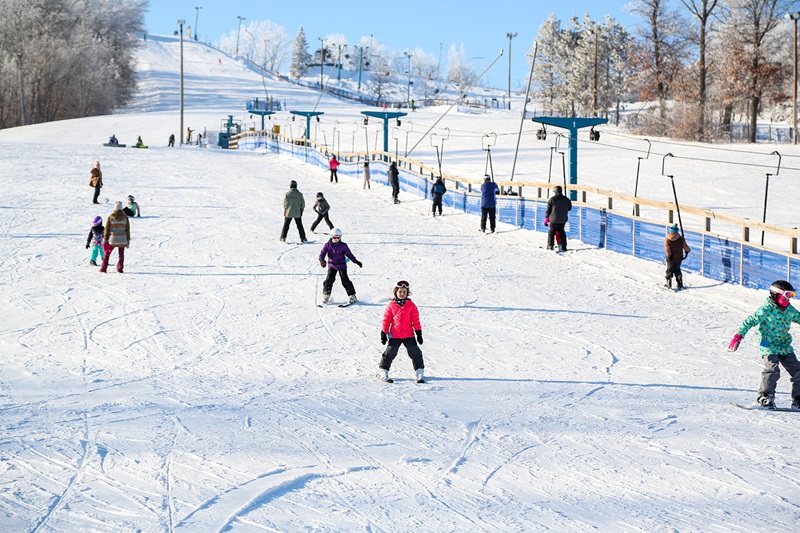
REA has invested in grid hardening and system upgrades, including replacing overhead lines with underground cable and improving backfeeding capacity. These improvements help ensure consistent service even during winter storms. By reducing outage risk, REA protects Andes Tower Hills’ operations and the broader local economy that depends on winter visitors.
Andes Tower Hills has benefited from REA’s commercial rebate and rate programs, which help the resort manage energy usage and invest in upgrades that improve efficiency. Programs like these align local energy reliability with long-term economic sustainability.
These investments also help the resort offset seasonal fluctuations in revenue. By reducing ongoing utility costs, REA’s programs enable ski operations to maintain quality service and stable employment throughout the season.
Meeker Energy: Powering Power Ridge, local partnerships
Meeker serves Powder Ridge near Kimball, a resort that embodies both the excitement and economic importance of winter recreation. Powder Ridge participates in Meeker’s Large Power Curtailable Program, voluntarily reducing snowmaking operations during peak demand periods.
This demand-response partnership benefits both the cooperative and the resort. Meeker gains flexibility to balance the grid during high-load events, while Powder Ridge lowers its energy costs and contributes to overall system stability.
Over the years, Powder Ridge has invested in high efficiency compressed air systems for snowmaking, reducing its peak winter demand and improving sustainability. These improvements demonstrate how energy efficiency and operational performance go hand in hand.
Meeker’s technical support and rebate programs help resorts adopt these innovations. Each improvement reduces strain on the local grid while ensuring that businesses remain competitive and resilient, especially as weather patterns shift.
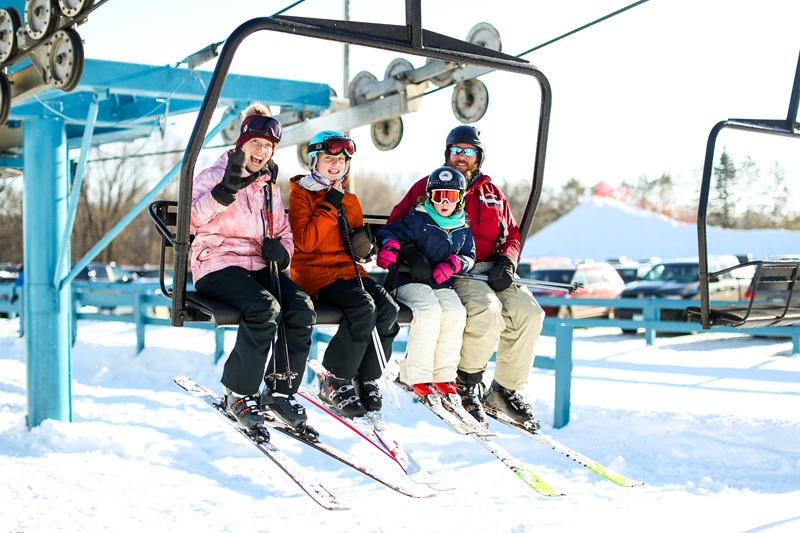
For Meeker, winter recreation is a community gathering point. The cooperative has hosted annual member appreciation events at Powder Ridge for more than a decade, drawing hundreds of attendees. These events increase member engagement and showcase how the cooperative’s service extends beyond electricity.
For more than 30 years, Meeker has sponsored the annual day of skiing for the Peanut Butter & Milk Festival, a cultural exchange between Litchfield, Minnesota, and Hartford, Alabama, chapters of the Future Farmers of America. Through this partnership, young people explore the agricultural and cultural ties between regions, often finished by a community day of skiing at Powder Ridge.
East Central Energy keeps Mont du Lac powered through peak season
In the rolling hills of northeastern Minnesota, ECE powers Mont du Lac, a ski resort that doubles as a four-season recreation destination. Ski resorts like Mont du Lac operate at peak capacity during winter, requiring high energy for snowmaking compressors, lifts, heating and hospitality services.
ECE has modernized the resort’s infrastructure by converting overhead lines to underground lines and increasing conductor size to handle heavier loads. These upgrades ensure stable voltage and protect the system from damage caused by wind and ice.
ECE’s real-time monitoring technology detects outages and voltage fluctuations in real time, allowing teams to respond quickly before they disrupt resort operations. During busy weekends, this level of reliability is critical to ensuring guest safety and supporting the region’s economic performance.
Mont du Lac has also benefited from ECE rebate programs after installing more energy-efficient systems. These upgrades lower operating costs and demonstrate how the cooperative model promotes sustainability while maintaining profitability.
The resort’s continued success has ripple effects for local restaurants, lodging providers and retail businesses. As one of the area’s anchor attractions, Mont du Lac draws visitors who support dozens of other small businesses in the region. ECE’s infrastructure investments protect this economic ecosystem and ensure that winter tourism remains a dependable contributor to northeastern Minnesota’s economy.
Cooperative power drives rural Minnesota’s winter economic engine
Each ski run, tubing hill and snow-covered slope across Minnesota reflects a deeper economic truth: Rural tourism depends on reliable, local power. Great River Energy’s member-owner cooperatives provide that foundation. Their work ensures that seasonal industries, especially ski resorts, can adapt and continue to deliver measurable value to their locals and visitors.
 " data-object-fit="cover">
 " data-object-fit="cover">